

A Procurement Pricing and Logistics Guide from a Custom Cigar Packaging Solutions Provider Prior to InterTabac 2026
The Pre-Show Procurement Mindset — What Changes When You Walk Into Hall 4 Prepared
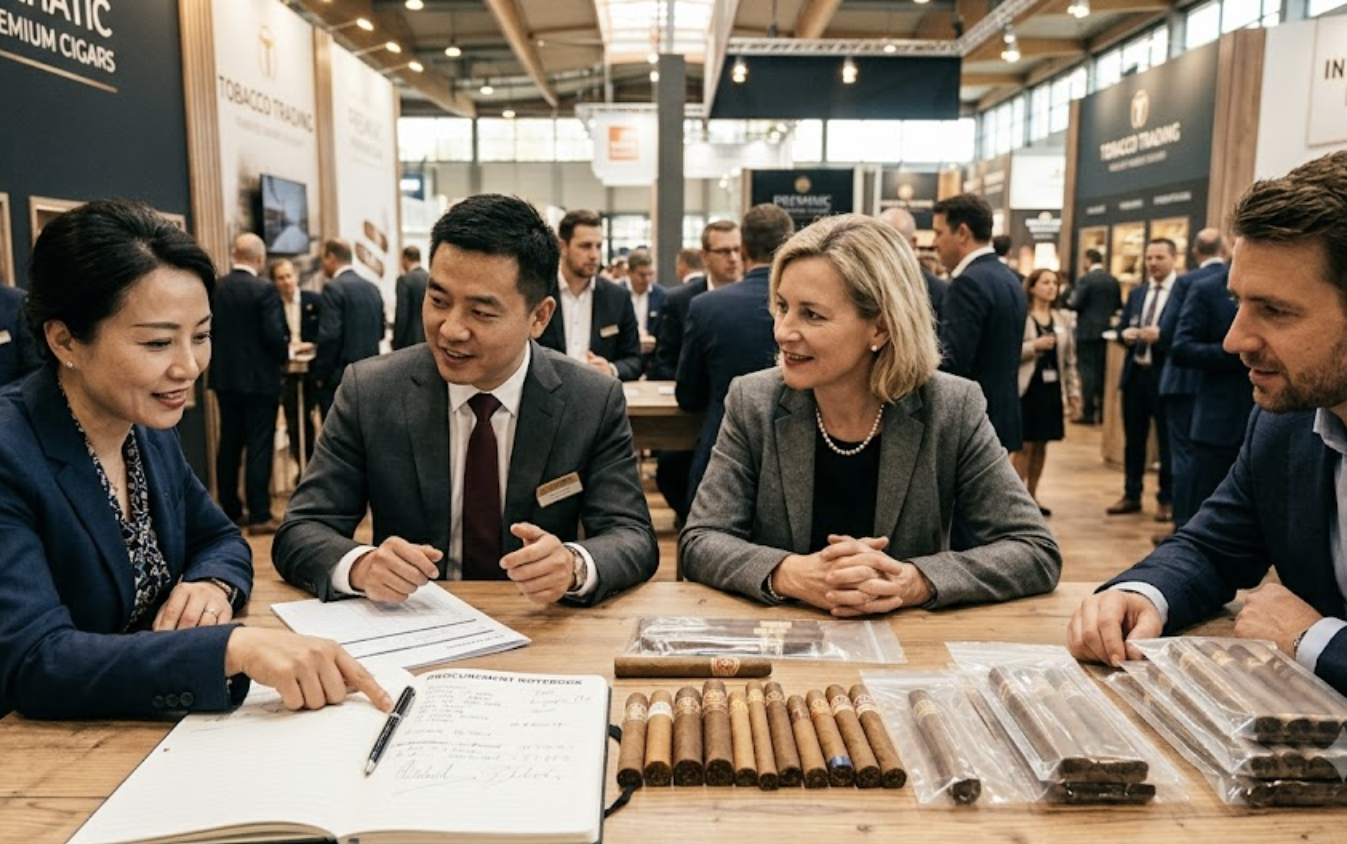
Trade fair conversations move quickly. A typical booth meeting at InterTabac runs between fifteen and twenty-five minutes, which leaves little room for discovery-mode questioning. Buyers who use that window to ask basic questions about film types, MOQs, or transit times often leave without a quotable price. Those who arrive with a defined annual volume projection, a confirmed SKU size matrix, and a target landing date in Europe or North America tend to walk away with indicative pricing and a tentative production slot.
Three pre-show data points generally separate productive booth visits from informational ones: projected twelve-month consumption per SKU, the vitola format spread, and the latest acceptable arrival date at the destination warehouse. With those numbers ready, suppliers such as YiTo Pack can move directly into tooling discussions rather than spending the meeting on company introductions.
Decoding MOQ Tiers — How Unit Pricing Behaves Across Volume Brackets
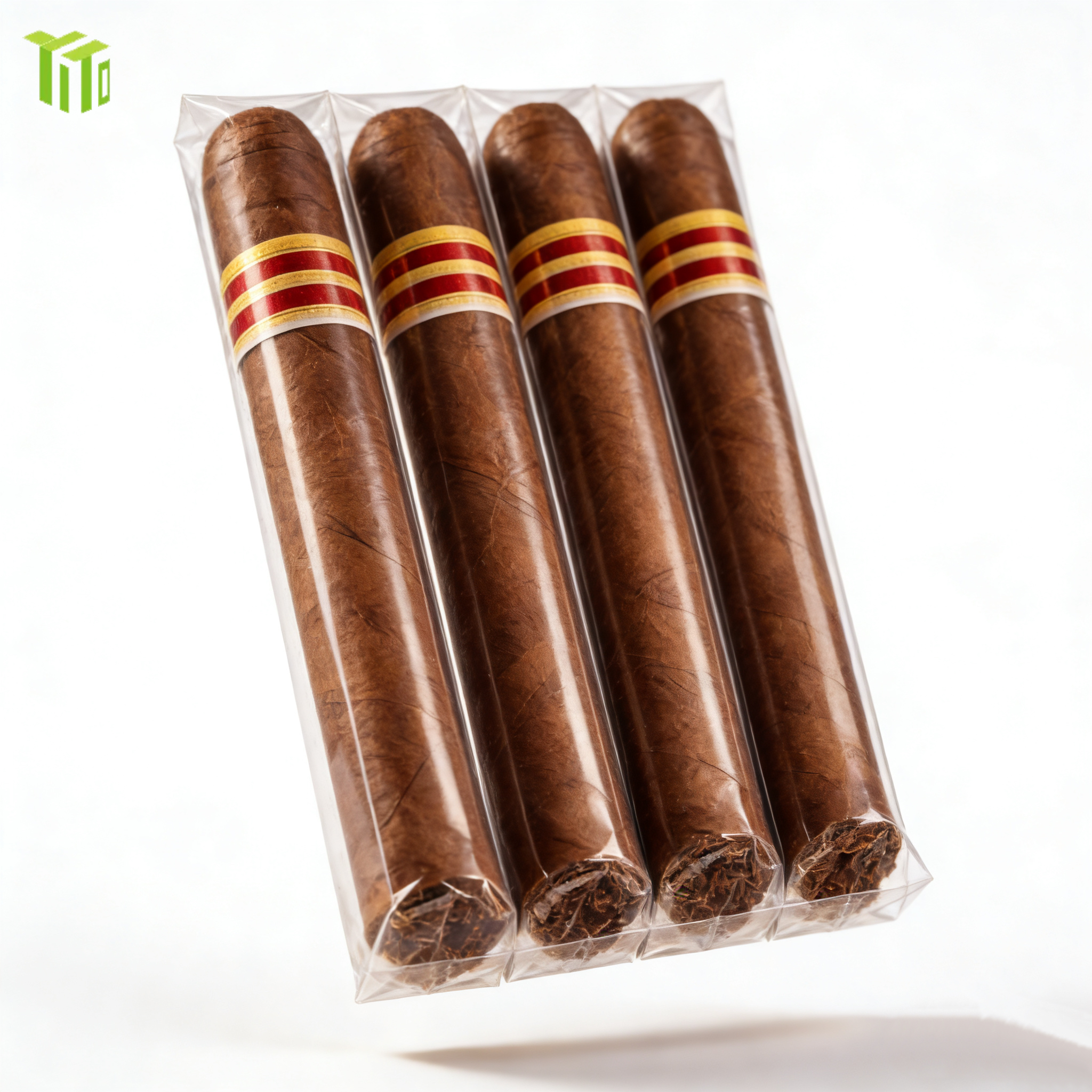
Cellulose-based cigar packaging follows pricing curves that differ noticeably from conventional BOPP or PP film. At the entry tier, generally between 10,000 and 30,000 pieces, the per-unit cost carries a noticeable sampling premium because plate setup, film changeover, and quality inspection are amortized across a small run. This tier suits new brand launches and limited-edition releases, though buyers should expect quotations to reflect setup-heavy economics.
The growth tier, roughly 50,000 to 200,000 pieces per SKU, is where unit pricing flattens. Cellulose film procurement at this volume allows suppliers to consolidate raw material orders and stabilize input costs. Margins on customization, including printing and die-cutting, also become more predictable.
At the wholesale tier of 500,000 pieces and above, raw material lock-in becomes the dominant cost lever. Currency exposure also enters the conversation, since extended production windows can stretch across two or three quarterly FX cycles. Biodegradable cellophane, in particular, behaves differently from synthetic films at this scale because wood pulp pricing follows its own commodity cycle. Buyers planning large annual programs benefit from discussing raw material indexing clauses well before signing.
Size Specification Economics — From Petit Robusto to Gran Corona
Vitola format selection drives a significant portion of tooling cost. A Petit Robusto bag requires less film per unit and uses smaller die-cut dimensions, while a Gran Corona format consumes more material and often demands reinforced sealing along longer edges. Between these endpoints sit Robusto, Toro, Churchill, and Lonsdale variants, each carrying its own die plate and folding configuration.
Printing economics shift in parallel with size. Solid color or single-tone branding on transparent cellulose remains cost-efficient across most volumes. Multi-color registration, particularly when metallic inks or fine typography are involved, introduces additional plate costs and slower line speeds. Mixed-size purchase orders, which buyers often submit to cover a full product family in one shipment, can inflate landed cost by ten to twenty percent compared with consolidated single-format runs.
YiTo Pack maintains a modular tooling library covering the standard vitola range, which allows new brand owners to bypass much of the upfront die investment for first production runs. This shortcut matters most for buyers who plan to validate a new SKU at retail before committing to full-scale annual contracts.
Shipping Windows — Matching Sea Freight and Air Freight to Post-Show Order Cycles
Production lead time after PO confirmation typically runs between eighteen and thirty days, depending on artwork complexity and tier volume. Artwork approval cycles, often overlooked during show negotiations, can add another five to ten days when multiple stakeholders sign off on color proofs.
Sea freight from South China to Hamburg or Rotterdam realistically takes thirty-five to forty-five days port-to-port, with another seven to ten days for customs clearance and inland distribution. Buyers targeting a December retail window should therefore confirm purchase orders no later than mid-October, which aligns naturally with post-InterTabac negotiation cycles. Air freight remains the practical option for Q4 sampling rounds, holiday-edition SKUs, and any program where the show meeting itself delays a critical decision. The cost differential, often three to five times sea freight per kilogram, can still prove justifiable when shelf-date penalties are factored in.
Working backward from the on-shelf date remains the most reliable planning method. A buyer who needs product in a Berlin warehouse by November 30 should reverse-calculate roughly seventy-five days for sea freight scenarios, which places the PO deadline squarely within the InterTabac follow-up window. For buyers exploring biodegradable cellophane cigar bag options, the same backward calendar applies, though raw material lead times for certified wood pulp film occasionally extend the front end by another five days.
The InterTabac 2026 Negotiation Checklist — Bringing the Right Numbers to the Booth
A compact pre-show data sheet generally produces the most efficient supplier conversations. Useful inputs include twelve-month volume per SKU, vitola format breakdown, preferred film substrate (cellulose, BOPP, or biodegradable cellophane), printing complexity, target landed cost range, and the latest acceptable arrival date. Buyers who carry this information into the booth shift the conversation from "what can you offer" to "can you meet these parameters at this price."
Questions that quickly distinguish manufacturers from trading intermediaries include inquiries about in-house printing capacity, film sourcing relationships, and tooling ownership. A direct manufacturer can answer these without consulting a third party.
Converting a booth conversation into a binding production slot generally requires three follow-up steps within two weeks of the show: signed quotation, artwork submission, and deposit confirmation. Buyers who complete these steps before mid-October typically secure Q1 2026 production windows without expediting fees.
InterTabac 2026 will reward buyers who treat the show as a negotiation venue rather than a discovery tour. YiTo Pack welcomes pre-show technical consultations and booth appointments through its official website at https://www.yitopack.com/.
HuiZhou YITO Packaging Co., Ltd.
HuiZhou YITO Packaging Co., Ltd.
+86 159 7508 6317
email us here
Visit us on social media:
LinkedIn
Instagram
Facebook
YouTube
Legal Disclaimer:
EIN Presswire provides this news content "as is" without warranty of any kind. We do not accept any responsibility or liability for the accuracy, content, images, videos, licenses, completeness, legality, or reliability of the information contained in this article. If you have any complaints or copyright issues related to this article, kindly contact the author above.
